You clock out at 8 PM — again. Your dinner is cold, your kids are already in bed, and you can’t remember the last weekend you didn’t check your work email. If this sounds familiar, you are not alone. Thousands of Singaporeans are quietly burning out, and many are now actively searching for companies with the best work life balance in Singapore before making their next career move. The good news? The landscape is changing — and this guide will show you exactly how to find, evaluate, and even negotiate the balance you deserve.
Companies With the Best Work Life Balance in Singapore

Work-life balance is no longer a luxury benefit reserved for senior executives. It has become a fundamental expectation for today’s workforce — and a powerful competitive advantage for employers who get it right. From updated government policies to the rise of hybrid and remote work, Singapore’s workplace culture is undergoing a genuine transformation in 2026.
Whether you are a fresh graduate evaluating your first job offer, a mid-career professional considering a switch, or a working parent trying to manage it all — this guide covers everything you need to know.
What Makes a Company Great for Work-Life Balance?
Not all “flexible” workplaces are created equal. A company that truly supports work-life balance goes beyond just saying it on their careers page. Here are the key traits to look for when evaluating an employer.
Flexible working hours are a non-negotiable starting point. Companies that allow employees to adjust their start and end times — rather than enforcing a rigid 9-to-5 — demonstrate genuine trust in their workforce.
Remote and hybrid work options have moved from pandemic necessity to permanent expectation. The best employers offer structured hybrid arrangements, giving employees the autonomy to work from home on designated days without penalising their career progression.
Mental health support is another critical differentiator. Look for employers who provide Employee Assistance Programmes (EAPs), mental wellness days, counselling access, and managers who are trained to have supportive conversations about burnout.
Finally, leave policies matter enormously. Companies that offer leave beyond the statutory minimum — including enhanced parental leave, caregiving leave, and mental health days — signal a culture that genuinely values human wellbeing over presenteeism.
Top Industries and Companies Known for Work-Life Balance in Singapore

Certain sectors in Singapore have earned a strong reputation for prioritising employee wellbeing. Here is a breakdown of the industries leading the charge.
Technology companies — particularly regional and global tech MNCs — consistently rank highest for work-life balance. Firms like Google, Microsoft, Shopee, and Sea Group offer robust flexible work policies, generous leave entitlements, and strong mental health resources. The tech sector’s output-focused culture also means results matter more than hours logged.
Financial services and banking has historically been demanding, but progressive institutions like DBS Bank, Standard Chartered, and HSBC Singapore have made significant strides. They have introduced hybrid work models, dedicated wellness programmes, and leadership development focused on sustainable performance.
The public sector — including government statutory boards like the Civil Service College, HDB, and various ministries — offers structured hours, transparent leave policies, and strong family-friendly benefits, making it a perennial favourite for working parents.
| Industry | Typical FWA Options | Notable Employers | Best For |
|---|---|---|---|
| Technology | Remote, flexi-hours, compressed week | Google, Microsoft, Sea Group | Output-driven professionals |
| Banking & Finance | Hybrid, staggered hours | DBS, Standard Chartered, HSBC | Career growth with stability |
| Public Sector | Flexi-hours, part-time options | Civil Service, Statutory Boards | Working parents, caregivers |
| Healthcare | Shift flexibility, part-time | Parkway, Raffles Health | Clinicians seeking structured rosters |
| Education | School-aligned hours, holiday breaks | MOE Schools, Private Institutions | Parents with school-age children |
When evaluating a potential employer, go beyond the job description. Check employee reviews on platforms like Glassdoor and Jobstreet, and ask direct questions about flexible work during your interview.
MOM Flexible Work Arrangement Guidelines 2026
The MOM flexible work arrangement 2026 framework represents one of the most significant shifts in Singapore’s employment landscape in recent years. Under the updated Tripartite Guidelines on Flexible Work Arrangements (FWAs), which took effect in December 2024 and continue to govern workplaces in 2026, employers with 10 or more employees are required to have a formal process for employees to submit FWA requests.
Critically, employers must consider all requests fairly and responsibly. While they are not obligated to approve every request, they must provide a written response — including a clear reason if the request is rejected. This provides employees with far greater transparency and recourse than ever before.
The three main categories of FWAs recognised by MOM are:
- Flexi-place — Working from a location other than the office (e.g., work from home, telecommuting)
- Flexi-time — Varying start and end times, staggered hours, or compressed workweeks
- Flexi-load — Adjusting the volume of work, such as moving to part-time arrangements
These guidelines apply to all employees, including those on fixed-term contracts, and cover both new and existing employment arrangements. To learn more, visit the official MOM website on flexible work arrangements.
“73% of Singapore employees say flexible work arrangements are important when considering a new job — yet only 52% currently have access to them.”
— Randstad Employer Brand Research, Singapore 2025
How to Request for Flexible Working Arrangements: MOM Guidelines Step-by-Step
Knowing your rights is one thing. Knowing how to request for flexible working arrangements MOM guidelines set out is another. Here is a clear, practical step-by-step process to help you make a successful FWA request.
- Review your company’s FWA policy. Check your employee handbook or HR portal. Under the 2026 guidelines, companies with 10 or more employees must have a formal process in place.
- Define your proposed arrangement clearly. Decide what type of FWA you want — flexi-place, flexi-time, or flexi-load — and specify the exact terms (e.g., “work from home every Monday and Wednesday”).
- Assess business impact and propose solutions. Think about how your role will be handled without disruption. Prepare answers to likely concerns: How will you attend urgent meetings? How will deliverables be tracked?
- Submit a written request to your manager or HR. Put your request in writing — email is acceptable. Outline the type of arrangement, the proposed start date, a trial period suggestion, and how performance will be measured.
- Await a formal response within the required timeframe. Under MOM guidelines, employers should respond within two months. If your request is declined, they must provide a written reason.
- If declined, request a discussion or escalate appropriately. You may request a meeting to discuss alternatives. If you believe the rejection is unfair, you can seek guidance through the Tripartite Alliance for Fair and Progressive Employment Practices (TAFEP).
4 Day Work Week Companies in Singapore
The idea of a 4 day work week companies in Singapore are beginning to trial is no longer a distant concept — it is a growing reality. Several organisations, particularly in the tech and creative sectors, have piloted compressed or four-day work schedules with compelling results.
The global 4 Day Week Campaign’s research consistently shows that companies adopting a four-day week report no decline in productivity — and often see improvements in employee retention, recruitment, and overall morale. In Singapore’s tight labour market, this is a powerful differentiator.
However, implementation is not without challenges. Client-facing roles, operations-heavy industries, and regulated sectors like banking and healthcare face structural barriers to fully compressing the workweek. Many companies instead opt for a compressed workweek model — working 40 hours across four longer days — rather than a true reduction in total hours.
If a four-day work week is important to you, ask prospective employers directly during interviews. You can also explore job listings filtered for compressed or reduced-hour roles to find employers already aligned with this philosophy.
Remote Jobs in Singapore for Citizens
The demand for remote jobs in Singapore for citizens has never been higher — and the supply is catching up. A wide range of roles now offer fully remote or hybrid arrangements across multiple industries.
The most remote-friendly job categories in Singapore currently include:
- Software development and engineering
- Digital marketing and content creation
- Data analysis and business intelligence
- Customer success and account management
- Finance, accounting, and payroll
- HR, recruitment, and L&D
- Project management and consulting
As a Singapore citizen or Permanent Resident, you have a natural advantage when applying for locally-based remote roles, as many employers prefer candidates in the same time zone and jurisdiction for legal, payroll, and compliance reasons.
To find remote opportunities, use platforms such as MyCareersFuture (filter by “remote” or “work from home”), Jobstreet, LinkedIn, and specialist remote work boards like Remote.co and We Work Remotely. Always verify the employer’s remote work policy before accepting an offer — ask whether remote work is a permanent arrangement or subject to change.
Maternity and Paternity Leave Entitlement in Singapore
Understanding your maternity and paternity leave entitlement Singapore law provides is essential for working parents planning their families. The statutory entitlements in 2026 are as follows.
Government-Paid Maternity Leave (GPML) provides eligible working mothers with 16 weeks of paid leave for the birth of a Singapore Citizen child. For the first and second child, the first 8 weeks are employer-paid and the remaining 8 weeks are government-reimbursed. From the third child onwards, all 16 weeks are government-paid.
Government-Paid Paternity Leave (GPPL) entitles eligible fathers to 4 weeks of government-paid paternity leave for the birth or adoption of a Singapore Citizen child, effective from 1 January 2024. This is a significant increase from the previous 2-week entitlement.
| Leave Type | Entitlement (Weeks) | Eligibility | Who Pays |
|---|---|---|---|
| Maternity Leave (1st/2nd child) | 16 weeks | Employed mothers, SC child | Employer (8 wks) + Government (8 wks) |
| Maternity Leave (3rd+ child) | 16 weeks | Employed mothers, SC child | Government (all 16 weeks) |
| Paternity Leave | 4 weeks | Employed fathers, SC child | Government (reimbursed to employer) |
| Adoption Leave | 12 weeks (mothers) | Adoptive mothers, SC child | Government (after 4 weeks) |
| Shared Parental Leave | Up to 4 weeks (shared) | Both parents, SC child | Government |
Beyond statutory minimums, companies with the best work-life balance in Singapore typically offer enhanced parental benefits such as extended maternity leave top-ups, childcare subsidies, lactation rooms, and structured return-to-work programmes. These are worth asking about specifically during salary and benefits negotiations.
Tips for Negotiating Better Work-Life Balance at Your Current Job
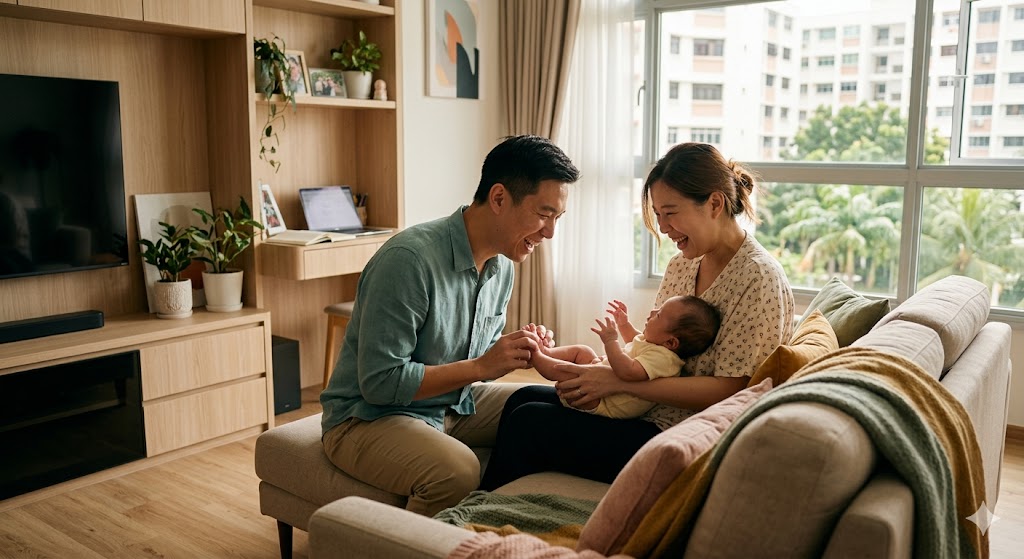
You don’t always have to change jobs to improve your situation. Here are practical, proven strategies to negotiate a better arrangement where you already work.
- Track your output, not your hours. Before any conversation with your manager, build a clear record of your deliverables and performance. Results-based evidence makes your case far stronger than any abstract request.
- Propose a trial period. Instead of asking for a permanent change immediately, suggest a 4-to-8-week pilot. This reduces the perceived risk for your employer and gives you a chance to prove the arrangement works.
- Frame it as a win for the business. Show how flexibility will reduce your commute stress, improve your focus, and boost your long-term productivity. Managers respond better to business cases than personal pleas.
- Reference the MOM FWA guidelines. Knowing your rights gives you a factual foundation for the conversation. You are not asking for a favour — you are making a formal request under a recognised framework.
- Be specific and realistic. Vague requests like “I want more flexibility” are easy to dismiss. Instead, say: “I’d like to work from home on Tuesdays and Thursdays and adjust my start time to 9:30 AM.” Specificity builds credibility.
- Know when to walk away. If your employer consistently refuses reasonable requests without valid justification, it may be a signal that the culture is not aligned with your values. Use that information to guide your next career move.
Conclusion: Your Work-Life Balance Starts With the Right Employer
The pursuit of sustainable work-life balance in Singapore is no longer idealistic — it is increasingly the standard that forward-thinking employers are held to. From the updated MOM flexible work arrangement 2026 guidelines to expanded paternity leave and the rise of remote and hybrid roles, the tools and policies to support a better work life are firmly in place.
Whether you are actively hunting for companies with the best work life balance in Singapore, preparing a formal FWA request, or simply trying to carve out more breathing room in your current role — the first step is knowing what you are entitled to and what is possible.
Ready to find a role that respects your time and your life? Explore our curated job listings from Singapore’s top flexible and family-friendly employers — and take the next step toward a career that works for you.